Sprint Race or Grand Prix Distance?
Sprint race or Grand Prix distance? Choose the format that suits your viewing time, attention, and appetite for evolving strategy and race stories.
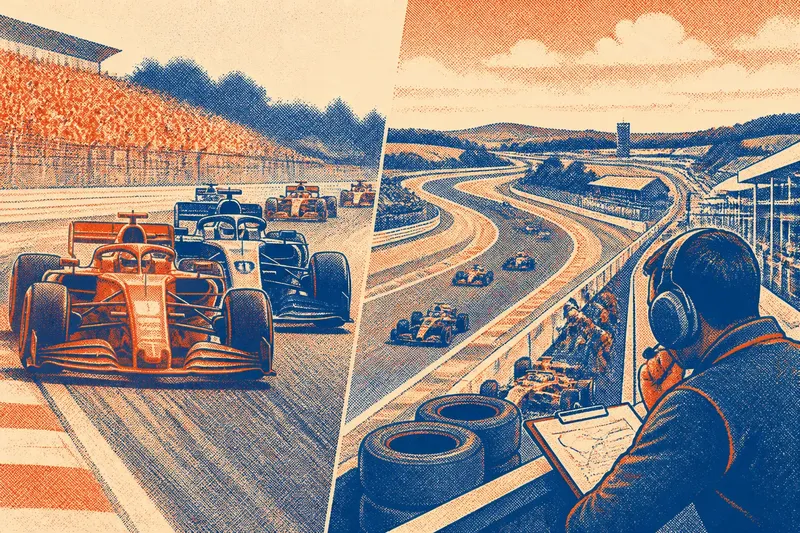
The most common mistake when choosing a sprint race or Grand Prix distance is treating the shorter event as a condensed version of the longer one. That can leave you expecting a full strategic arc from a race built for immediate pressure—or expecting nonstop action from a Grand Prix whose interest grows through changing conditions. Match the format to the kind of viewing you want, and you’ll know what to watch for before the lights go out.
Start with your viewing window
If you have a limited stretch of uninterrupted time, a sprint usually fits better. Its compact format puts the start, early position battles, and closing laps close together, with less room for a long period of settling into a rhythm. You can watch the whole contest as one concentrated event rather than leaving and returning to follow a changing race.
A Grand Prix distance is the better fit when you can stay with the broadcast for a longer arc. The opening laps matter, but they are only one part of the story. The field may spread out, strategies may divide, and a driver’s prospects can shift as tires, traffic, and track conditions change.
Think about the interruption you can tolerate, not just the advertised duration. A sprint can still include pauses or disrupted running, while a longer race can have stretches with little position change. If you need to step away, a long event may offer natural points to return; if you want a clear beginning-to-end session, a sprint is easier to keep in view.
Choose the format you can watch attentively, not the one that sounds more substantial.
Choose your preferred story
Pick a sprint if you enjoy a story with a quick setup and a narrow focus. The opening order is immediately consequential: a clean launch can protect a position, while a poor one can force a driver into traffic before there is much time to recover. Each exchange tends to feel close to the central question of the race: who can make progress now?
Choose Grand Prix distance if you prefer a story that can change its subject. A driver who begins in front may have to defend later; someone who starts farther back may gain ground through pace, timing, or a different approach to the race. The narrative is less likely to be settled by a single early moment, and the closing phase can carry a different tension from the opening.
Imagine you have one free afternoon and want to follow one driver’s decisions rather than keep track of every battle. In a sprint, you might watch how that driver protects position at the start and chooses when to attack. In a Grand Prix, you can follow the same driver through an early stint, a change of tires or conditions, and the consequences of those choices later on.
For an immediate duel, choose the sprint. For a story that can turn over time, choose the Grand Prix.
Read the race rhythm
A sprint often has a compressed rhythm: launch, first-lap sorting, a period of direct pressure, then a finish that arrives before the race has had much time to breathe. That does not mean every lap is a fight for position. It means there is less distance for a driver to wait out a problem or build a gradual response.
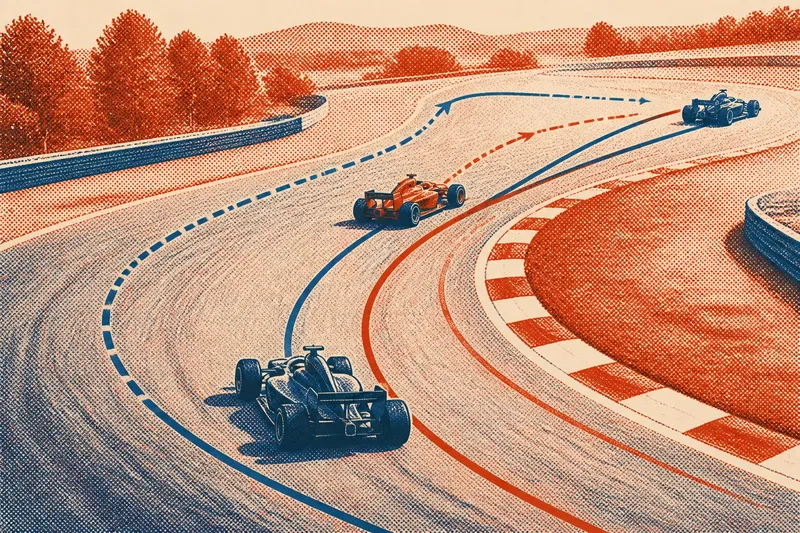
That compression changes how you read a mistake. A missed braking point or a compromised exit can matter because the driver may have few remaining chances to regain the lost ground. Watch the gaps as well as the overtakes. If two cars remain close but neither can pass, their battle may still be shaping the result by forcing one driver to defend and manage the car under pressure.
A Grand Prix tends to alternate between intensity and quieter stretches. A gap can grow without making the race irrelevant: the driver behind may be managing tires or waiting for a more favorable opportunity, while the leader balances pace against what remains in the event. A position change is only one kind of development. A shift in gap, a change in tire behavior, or a driver moving into clean air can alter the next phase.
Use the quiet laps to notice what is changing, rather than waiting only for an overtake.
Compare the strategic room
Short races generally leave less room for a strategy to unfold through multiple phases. Depending on the event’s rules, the race may offer few strategic choices beyond how aggressively to use the available tires and how to handle traffic. The strategic interest often lies in execution: getting away cleanly, placing the car well, and making a move before the opportunity closes.
Longer races can give teams more time to weigh competing approaches. Tire choice, the timing of a stop, and the decision to extend a stint can affect where a car rejoins and which rivals it encounters. The point is not to treat every strategy call as a puzzle with one obvious answer. Watch how a choice changes the driver’s next task: defend on older tires, pass cars after a stop, or build a gap before a rival responds.
Rules vary by series and event, so the number of stops, tire requirements, and available formats are not the same everywhere. Check the event’s published format and regulations when those details affect what you expect to see.
If you like watching decisions accumulate, choose the Grand Prix. If you prefer the pressure of making a position stick, choose the sprint.
Which format suits you?
Which race is easier to watch in one sitting?
A sprint is usually easier to follow from start to finish because its central action is concentrated. A Grand Prix is a better choice if you can give the broadcast sustained attention and enjoy seeing the event develop across separate phases.
Which format gives a comeback more room?
A longer distance generally gives a driver more time to recover from a poor start or adjust to changing circumstances. A sprint can still feature a charge through the field, but the limited distance makes early losses harder to erase.
Which race is more about strategy?
Grand Prix distance usually offers more scope for a strategy to shape the event, especially when tire decisions and pit stops are part of the format. In a sprint, the tactical emphasis often sits closer to immediate racecraft: starting well, choosing a moment to attack, and defending without losing momentum.
Can a sprint still have a complete story?
Yes. Its story can be complete without containing the same range of phases as a longer race: a start, a contested position, and a decisive late move can make a clear arc. The difference is the scale of the development, not whether the event has a story.
Pick by viewing mood
Choose a sprint when you want a compact session, close attention to starts and passing attempts, or a contest whose pressure arrives quickly. It suits a viewer who likes decisive moments and does not need every race to include extended strategy.
Choose Grand Prix distance when you want to settle in, compare different approaches, and see whether an early advantage survives. It suits a viewer who finds interest in the changing relationship between pace, tires, traffic, and timing, even during laps without a pass.
If you are undecided, choose based on the question you most want to follow: “Who can make a move before time runs out?” points toward a sprint; “How will the race change as it develops?” points toward a Grand Prix distance. That distinction also makes it easier to enjoy both formats without judging one by the other’s rhythm.