Why a Chicane Changes the Shape of a Lap
Why a chicane changes the shape of a lap: learn to read its linked turns, speed changes, sightlines, and effect on the corner that follows.
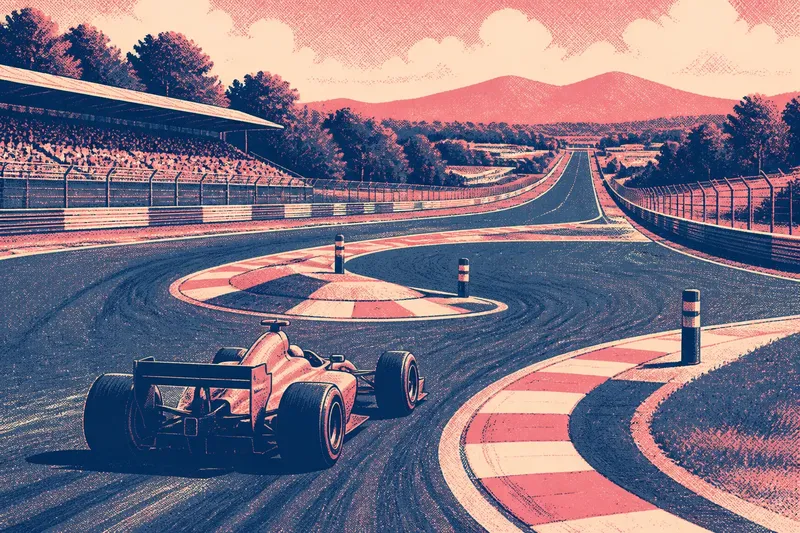
The common mistake is to read a chicane as two separate corners: brake for the first, turn, then deal with the next. That misses what the layout is asking a driver to do, and it makes the lap harder to follow from a grandstand or a timing screen. A chicane changes the shape of a lap by replacing a single stretch of track with a linked sequence whose first bend sets up the next.
For spectators, the useful question is not simply who takes the first apex. Watch how a car enters the whole sequence, where it changes direction, and what kind of track it meets on exit. Those details reveal why two chicanes that look similar on a map can produce very different racing.
Read the sequence
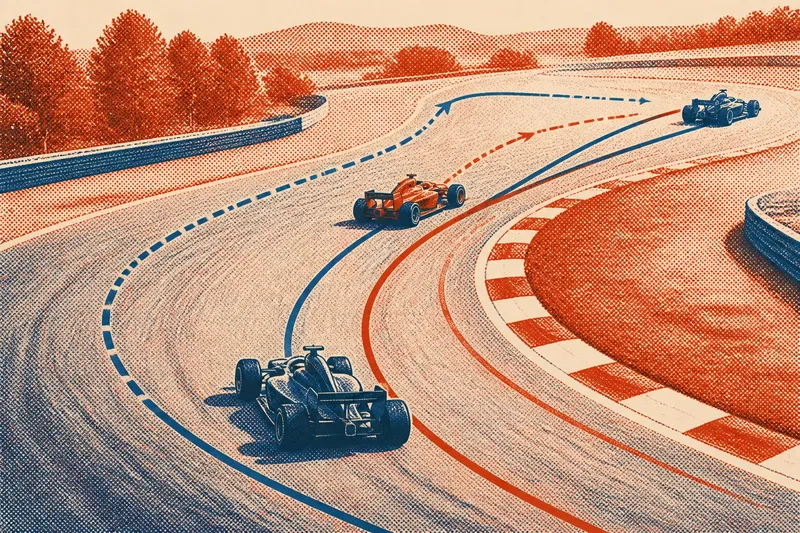
A chicane is a short series of opposing turns, often inserted into a faster section. The driver must change direction in quick succession, so the first corner cannot be judged on its own. A line that makes the initial turn look tidy may leave the car poorly placed for the next one.
Start by tracing the route with your finger on a circuit map. Follow the track from the approach, through each change of direction, and out to the next bend or straight. Notice whether the turns are tightly linked or separated by a short straight. That gap changes the rhythm: a car may settle briefly between corners, or it may have to transfer direction almost at once.
Then watch a few cars through the same sequence. Look for where each one begins to turn, how much of the track it uses, and whether its exit points toward the next section. You do not need to decide which line is fastest. The aim is to see the chicane as a connected shape rather than a pair of isolated moments.
Spot the rhythm change
A chicane interrupts a circuit’s previous rhythm. A long straight encourages a driver to build speed and read the distance ahead; the chicane then asks for a rapid transition from approach to braking, turning, and direction change. Once past it, the circuit may open into another straight, a sweeping bend, or a further technical section.
That transition can make a lap feel as if it has been cut into chapters. Before the chicane, the car may appear to be traveling in one sustained direction. Through it, the motion becomes a compact sequence of corrections and reversals. Afterward, the next landmark becomes the new reference point.
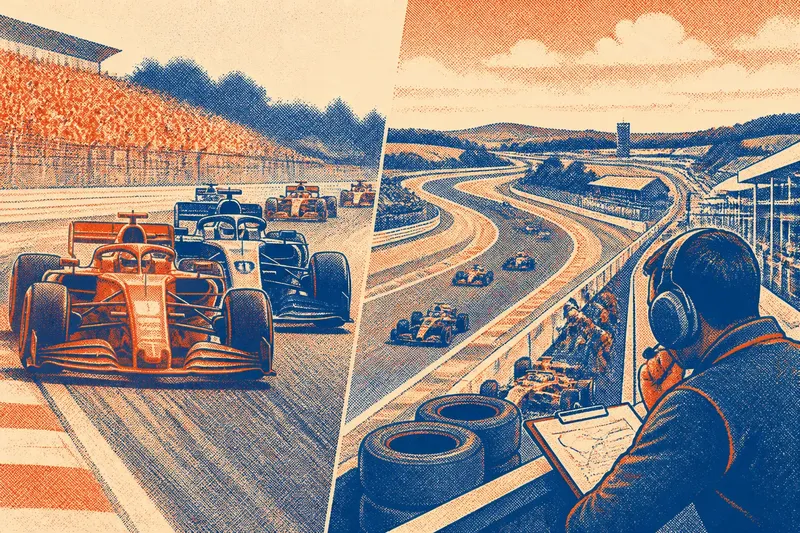
Compare the same part of a lap from different viewing positions if a broadcast or circuit map makes that possible. A trackside angle may show the change of direction clearly, while an overhead view reveals how the sequence sits within the broader route. Keep the focus on the track’s geometry, not on guessing what a driver is doing with a particular control.
Track the exit
The exit matters because a chicane does not end at its final turn. It ends in relation to what follows. If the sequence opens onto a long straight, the direction and space available at the exit shape how the car approaches that straight. If another corner comes quickly, the exit becomes the approach to a second decision.
Imagine you are following a car through a chicane that feeds into a long straight. It arrives on the outside of the first bend, changes direction, and leaves the final turn pointed toward the open track. The observable result is that its path through the sequence aligns with the straight ahead; the first corner’s appearance alone does not explain the route.
When watching, keep your eyes on the final turn and the first few car lengths beyond it. Does the track widen, narrow, or immediately bend again? Does the car leave the sequence with room to run out, or is it already being directed toward another change? These clues explain the chicane’s role in the circuit rather than just its appearance.
Compare chicane shapes
Chicanes vary in spacing and direction. One may be a tight left-right pair, another a broader sequence with a short straight between turns. Some reverse the order. These differences determine whether the sequence looks like a single compact obstacle or a set of linked corners with a distinct pause in the middle.
Use a simple comparison: note the approach, the distance between turns, and what comes next. A circuit map can help identify the bends, but a map does not tell you how the sequence looks from the ground. A broadcast view, spectator vantage point, or onboard footage can add the missing sense of pace and visibility.
- Tight spacing: Watch how quickly the car changes direction after the first turn.
- A short straight between bends: Notice whether the sequence has a visible beat between its turns.
- A straight after the chicane: Follow where the car points as it clears the final bend.
- Another corner immediately afterward: Treat the chicane and following turn as a longer linked section.
- Limited sightline: Compare an overhead view with a trackside one to understand what each reveals.
These observations make it easier to tell two visually similar layouts apart. The important difference may be what the chicane connects, not how dramatic its turns look on a diagram.
Questions about chicanes?
Why do circuits include chicanes?
A chicane changes the path through a section by adding opposing turns where the track might otherwise continue more directly. Its effect depends on its location and on the sequence of corners and straights around it.
Is a chicane one corner or two?
It is usually described as a sequence of opposing bends, but it is more useful to watch it as one linked piece of track. The exit from one turn affects how the next can be approached.
How can I spot a chicane on a circuit map?
Look for a short section that bends one way and then promptly bends back. Check the surrounding route as well, because the approach and exit help explain how the sequence fits into the lap.
Why can two chicanes feel different?
The spacing, direction, sightlines, and following section can all change the impression. A pair of close turns before another corner creates a different rhythm from a broader sequence leading onto open track.
Make the lap legible
To read a chicane clearly, choose one reference before watching: the approach, the direction change, or the exit. Follow that same point for several cars instead of trying to take in every detail at once. You will begin to notice how the layout gathers a lap’s movement into a compact sequence, then releases it toward what comes next.
Why a chicane changes the shape of a lap is easiest to see in context: trace the track before it, through it, and beyond it. The best viewing spot is often the one that lets you see both the change of direction and the next section, even if it is not the closest one to the barriers.